


Firms know that fraud damages their reputations, and failed payments derived from fraud lead to customer churn.
Almost half of retailers agreed that failed payments hurt customer satisfaction, PYMNTS Intelligence found in “Fraud Management, False Declines and Improved Profitability,” a collaboration with Nuvei. Although companies put effort and resources into preventing fraud, they are not always successful. Around 11% of mid-sized firms in the United States experienced failed payments in online transactions in the last 12 months. One-third of them identified fraud as the cause of these frictions.
Fraud by Payment Method
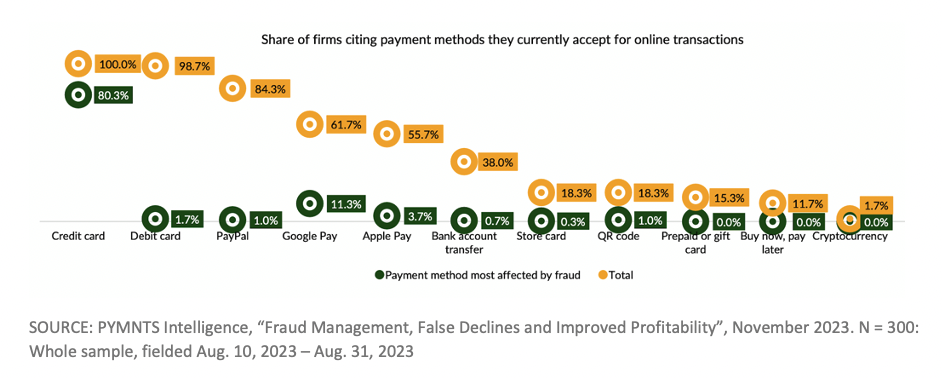
Of all payment methods, credit cards are the most affected by fraud, according to 80% of firms. Lagging at a distance are digital wallets like Google Pay, with an 11% fraud rate, and Apple Pay, with less than 4%. Credit cards are the most recurring payment method for online purchases. But data protection and fraud prevention systems are more secure in other alternative payment methods, such as digital wallets themselves, or the PayPal platform.
Over half of companies plan to invest in tools or technologies used to combat fraud over the next year, recognizing the necessity of adopting advanced anti-fraud solutions as a priority. Nine out of 10 firms intend to use technology developed by third parties. No matter if the solution comes from in-house developers or external vendors, reducing payment friction can improve customer retention and maintain brand reputation, which is directly translated into higher profitability.
About the Numbers
“Fraud Management, False Declines and Improved Profitability” examines the intersection of fraud prevention and failed payments in eCommerce. It draws on insights from a survey of 300 executives from online firms generating more than $100 million in annual revenue.
Credit: Source link