


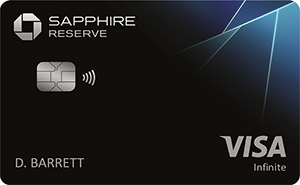
As the “tri” in the name implies, the Chase trifecta involves three credit cards working together in harmony. These cards are usually the Chase Freedom Flex®
*
The information for the Chase Freedom Flex® has been collected independently by Blueprint. The card details on this page have not been reviewed or provided by the card issuer.
, the Chase Freedom Unlimited® and Chase’s premium card, the Chase Sapphire Reserve®.
By pairing these three Chase credit cards together, you can take advantage of complementary earning rates to increase your total rewards. Here’s how to build your own Chase trifecta and use it to maximize your credit card rewards.
What is the Chase trifecta?
The Chase trifecta involves keeping three Chase credit cards in your wallet — typically, the Freedom Flex, the Freedom Unlimited and the Sapphire Reserve. The key is knowing which one to pull out for each purchase you make.
Taking the time to understand which card you should use for different types of purchases is what will ensure you pile up the rewards with your everyday spending. For example, with the Chase trifecta you won’t use the same card at a pharmacy as you would to book train tickets.
About the Chase Freedom Flex
With the Chase Freedom Flex, you’ll pay no annual fee and earn rewards in multiple categories that make sense for most American households.
You’ll earn 5% cash back on up to $1,500 in categories that rotate quarterly (requires activation), 5% cash back on travel purchased through Chase Travel℠, 3% cash back on dining and drugstores and 1% cash back on all other purchases. Rotating categories have included Amazon, PayPal and home improvement stores in the past.
You’ll also enjoy benefits with Lyft and DoorDash, travel insurance protections, cellphone protection and purchase protections.
About the Chase Freedom Unlimited
The Chase Freedom Unlimited keeps things simple. There is no annual fee and it shares some earning categories with the Freedom Flex. You’ll earn 5% cash back on travel purchased through Chase Travel℠, 3% cash back on eligible dining and drugstore purchases and 1.5% cash back on all other purchases.
However, its most advantageous feature is the above-average cash back rate on all those “other” purchases that don’t fall into bonus categories on your other credit cards.
The card also offers a lucrative welcome offer as well as robust travel insurance and purchase protections.
About the Chase Sapphire Reserve
The Chase Sapphire Reserve is a premium credit card with a $550 annual fee. While that may seem shocking at first, the card comes loaded with benefits that can more than offset the cost.
You’ll get unlimited airport lounge visits to Priority Pass (enrollment required) and Chase Sapphire Lounge locations with this card. You’ll also get up to $300 in annual travel credits, applied automatically to qualifying purchases each year.
Then, there are the earnings. You’ll earn 5 points per $1 on flights and 10 points per $1 on hotels and car rentals purchased through Chase Travel℠ after the first $300 is spent on travel purchases annually. Earn 3 points per $1 on other travel and dining and 1 point per $1 on other purchases.
Plus, there are complimentary memberships to DoorDash and Instacart+ and bonus earning categories with select partners, such as Lyft and Peloton. You’ll also get access to a strong suite of travel insurances and purchase protections.
How does the Chase trifecta work?
The Chase trifecta works by combining the complementary rewards rates on three different credit cards to maximize your Ultimate Rewards® earnings. You may be surprised to see three cards working together when one is described as earning points while the other two are described as earning cash back.
The key is that all the cards actually earn Ultimate Rewards Points. Even though they are marketed as cash-back cards, your rewards are tracked in points. Therefore, all three cards work together quite nicely and you can redeem your rewards for cash back, travel or gift cards.
The Sapphire Reserve allows you to get even more value from your points as you can redeem them for 50% more for travel booked through Chase Travel℠. You can also transfer points to 14 hotel and airline partners for even greater value.
How to maximize rewards with the Chase trifecta
The Chase trifecta can maximize your earnings by giving you different card options to earn the most points for each purchase. When shopping at drugstores, you can use either Freedom card for the highest earnings. For any purchases with Lyft, the Chase Travel portal, dining, travel, or Peloton, you’ll pay with the Sapphire Reserve for the best earning rates.
Depending on the bonus categories available each quarter, you’ll make those purchases on the Freedom Flex to earn the bonus rate (up to the spending cap). For anything else, use the Freedom Unlimited for its elevated flat rate on all purchases.
In this way, you’re earning valuable points across three cards that work well together. Two of the cards have no annual fee, keeping your out-of-pocket costs to a minimum. Yes, they share some earning categories, but their differences provide complementary rewards categories as well.
How to use different cards in the Chase trifecta
While the above trio is arguably the most popular combination, you can swap out cards depending on your tolerance for annual fees and what benefits you want from a card.
If you don’t see yourself earning enough rewards or using lounge visits enough to justify the annual fee on the Sapphire Reserve, consider swapping it for the Chase Sapphire Preferred® Card.
The Preferred has a $95 annual fee and offers up to $50 in hotel credits for bookings made with Chase Travel each year. You won’t get lounge visits, but you’ll still enjoy similar earning rates. You’ll earn 5 points per $1 on travel purchased through Chase Travel℠, 3 points per $1 on dining, select streaming services, and online grocery purchases (excluding Walmart, Target and wholesale clubs), 2 points per $1 on all other travel purchases and 1 point per $1 on all other purchases. Points are worth 1.25 cents apiece toward Chase Travel bookings with the Preferred, rather than the 1.5 cents on the Sapphire Reserve.
There’s also a business-only version of the Chase trifecta, where you pair three business cards — the Ink Business Cash® Credit Card, the Ink Business Unlimited® Credit Card and the Ink Business Preferred® Credit Card
*
The information for the Ink Business Preferred® Credit Card has been collected independently by Blueprint. The card details on this page have not been reviewed or provided by the card issuer.
. The Ink Business Preferred has a $95 annual fee; the other cards have no annual fee.
Amex trifecta vs. Chase trifecta: Is one better than the other?
The Amex trifecta employs the same idea, but using cards that earn American Express Membership Rewards® points instead. By combining the benefits and earning categories of The Platinum Card® from American Express (terms apply), the American Express® Gold Card (terms apply) and The Blue Business® Plus Credit Card from American Express
*
The information for the The Blue Business® Plus Credit Card from American Express has been collected independently by Blueprint. The card details on this page have not been reviewed or provided by the card issuer.
(terms apply), you can earn bonus points on flights and prepaid hotels booked via American Express Travel, restaurants and U.S. supermarkets and an elevated flat rate on other eligible purchases outside the bonus categories.
All information about The Blue Business® Plus Credit Card from American Express has been collected independently by Blueprint.
However, most of these earning rates come with disclaimers, which is a downside. There are different spending caps for categories and this requires some management. The Chase Freedom Flex has a spending cap on its highest rewards categories, which is standard for all rotating category cards, but you won’t hit spending caps with the Flex’s other categories or with your other Chase cards.
Finally, there’s the cost. The Amex trifecta annual fees are much higher than the standard Chase trifecta.
Granted, you’ll have access to more airline and hotel transfer partners with Amex than with Chase. However, you won’t enjoy the increased redemption rate for booking through the issuer’s portal, Amex Travel, that you can get when booking with Chase. You’ll also have several gaps in your earning categories that Chase offers but Amex doesn’t, such as drugstores and a general “travel” category.
Of course, the most relevant trifecta for you is one that offers earning categories and benefits that match your needs and spending habits. For some people, their spending aligns better with the Amex trifecta; for others, it’s the Chase trifecta. You might even have both — it’s not unheard of.
What are the benefits of having multiple Chase cards?
There are several benefits to having multiple credit cards. First, you can maximize earnings by having cards with complementary earning rates. Having multiple credit cards earning the same type of points can help you amass those rewards quicker, rather than earning piecemeal rewards in multiple programs that may not really “add up” to what you want when it’s time to redeem.
Also, having more credit cards — and, therefore, more available credit — can help your credit score. Your utilization rate (how much of your available credit you’re using right now) can go down by using multiple credit cards responsibly, potentially boosting your credit score.
However, there are risks involved. Having multiple credit cards can present more opportunities for overspending and credit card debt. It’s also easier to forget to make a payment and end up with fees and interest that become harder and harder to shake over time.
Opening numerous credit cards in a short period can also look risky to lenders. Not to mention multiple hard inquiries that can have a negative (albeit temporary) effect on your credit score.
Tips for managing multiple credit cards
If you have — or want to have — multiple credit cards, a few tips will help you manage them:
- Track spending. Keep track of the earning categories on each card to use the right one for the purchase at hand.
- Utilize your perks. Stay on top of the cards’ additional benefits, like complimentary memberships and statement credits, to ensure you’re getting maximum value.
- Be organized with payments. Know your due dates and when your annual fees will be charged. Set up autopayments to ensure you never miss a payment.
- Reevaluate your cards each year. Consider how much value you got from the card and whether it still aligns with your spending. If not, look into downgrading your credit card to preserve the credit history while getting a card that better suits your needs.
Frequently asked questions (FAQs)
Credit card trifectas can be a powerful way to maximize the points you earn in one program — such as Chase or American Express. By using cards with complementary earning rates, you’ll earn as many points as possible on every purchase you make.
If you’re able to use them responsibly and align the earning categories with your spending habits it’s definitely worth it. If you’re not getting more value than the cost of the cards’ annual fees or are overspending by having too many credit cards, it’s not worth it.
The Chase trifecta is best for those who want to earn extra Ultimate Rewards points on every purchase without carrying multiple cards with annual fees. By mixing two no-annual-fee cards into the earning plan, you’re able to add additional bonus earning categories without increasing out-of-pocket costs. This strategy is best for those who value Ultimate Rewards points and who are eligible for more Chase credit cards.
Yes, you can. In fact, Chase doesn’t have any written rules about the number of its credit cards you can hold at a time. Instead, Chase is more likely to limit the amount of credit it will extend to you, not necessarily tied to a specific number of credit cards.
The rule you’re most likely to run into however, is the unpublished but often cited Chase 5/24 policy. This makes it almost impossible to get approved for a Chase credit card if you’ve gotten five or more new credit cards (from any issuer) in the past 24 months.
For most people, the main version of the Chase trifecta discussed above will make sense. And out of the three cards included, most people will start with the Chase Freedom Unlimited to have a solid rate of return on all purchases while building their relationship with Chase.
It may be difficult to get approved for the Sapphire Reserve if you have no prior relationship with Chase. Over time, and with responsible card usage, you can apply for additional Chase credit cards to complete the trifecta.
It’s possible to have more than one. You may have a Chase trifecta of personal credit cards for your personal expenses and a Chase business trifecta for your small business or freelance projects.
Credit: Source link