


For once, a change to credit cards which looks like an obvious win for consumers.
From October 1, that irritating ‘card surcharge’ line on your coffee receipt (and everything else you buy) disappears.
Great. Except, there’s a catch …
The same reforms that kill the surcharge are also cutting into the money banks make from these card payments. And that money helps fund your credit card rewards, perks and interest-free days.
As frequent flyer expert Adele Eliseo put it: banks “simply are not going to have as large a pool of money to fund those benefits”.
So while tapping is about to get simpler, using your credit card could become a lot less rewarding.
RBA’s reasoning
The Reserve Bank has banned surcharges on eftpos, Mastercard and Visa payments, whether you’re using a debit, prepaid or credit card. American Express and Diners Club are not covered by the ban.
In its conclusions paper on merchant card payment costs, the RBA found Australians were wearing about $1.6 billion of the $1.8 billion in surcharges paid each year on those networks. It also found the rules had become so confusing that surcharging “no longer works as intended”.
The bit most people missed is the second half of the reform: interchange – the fee paid by your bank when you use your card – is being slashed. The cap on consumer credit cards interchange falls from 0.8 per cent to 0.3 per cent from October 1. For debit cards, it drops to 0.16 per cent or eight cents, while foreign-issued cards will have a one per cent cap from April 2027. The RBA estimates the changes will strip about $660 million a year from card issuer revenue.
Interchange helps fund your loyalty program points. So the banks have done exactly what the RBA warned they might: “By reducing the benefits available on their consumer credit cards, such as lowering rewards points, shortening interest free periods or raising credit card interest rates.”
And all three are now happening at once … So what should you do?

Time to give your card a health check
The card that suited you a year ago might not be the right fit after the surcharge ban.
Rewards are being cut, fees are changing and some benefits are being trimmed back. And if you’re paying for perks you barely use, it could be time to rethink the deal completely.
You don’t need to rush out and cancel it. Just take a few minutes to look at what you’re paying, what you’re using and what’s actually coming back to you.
Related Article Block Placeholder
Article ID: 342152

Here’s how to get the most from your card before October 1 – and how to work out if it will still be doing a good job for you after that.
First, do the maths
Add the new “rewards program fee” to the annual fee, then work out what you actually redeemed your points for last year.
A rewards card only makes sense if the value you get back is greater than what you pay to have it. If the sums no longer stack up, downgrade to a no-frills card rather than cancelling and hurting your credit file.
Use your points before they shrink
Your points are about to buy you less. Westpac and St.George are lifting the points needed for a $100 gift card by 25 to 47 per cent from September 30.
So if you’ve been saving up for a reward, check the redemption rate now. Points are a currency, and just like money, they can lose value. If you can get the reward you want before the changes kick in, it makes sense to do it.
If you carry a balance, forget rewards entirely
RBA figures show $19.4 billion of credit card debt accruing interest at an average 18.61 per cent, which Canstar calculates as $10 million in interest a day. No rewards program can make up for that.
A low-rate or balance transfer card is the answer.
Read the letter
Every one of these changes will arrive by email or statement insert before late October. Instead of just scrolling past them, click open and have a good read.
Check whether your interest-free period has quietly gone from 55 days to 45. That’s 10 fewer days to clear your balance before interest kicks in.
Related Article Block Placeholder
Article ID: 342740
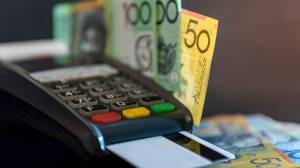
Do not expect sticker prices to fall
The RBA says about 16 per cent of businesses currently surcharge, and most are likely to simply build the cost into their prices instead.
So while the surcharge disappears from your receipt, the cost doesn’t necessarily disappear.
The upside is real
You will finally know at the register what you are paying, and small businesses get a genuine cut in payment costs. But the loyalty gravy train, funded by fees ultimately paid by merchants, is pulling out of the station.
This article was first published by Your Money & Your Life.