


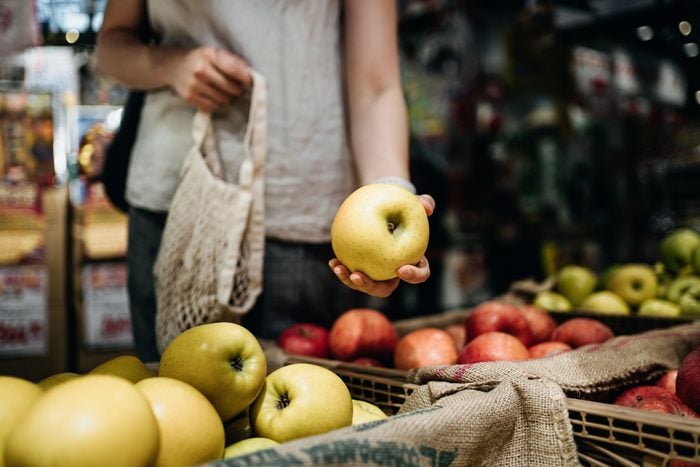
6. Buy whole fruits and veggies
Pre-chopped onions and carrots cost more than buying the veggie and doing it yourself. Yes, it takes a little more time, but it can save you some major money. You may want to avoid oranges, however, due to an orange shortage. Here’s how to store produce to make sure those veggies last too.
7. Go generic
Before you pick up that name-brand condiment, take a look at the store brand version sitting right beside it. These options are typically significantly cheaper and contain the same basic ingredients.
8. Pay attention to unit prices
Figure out the unit price (total cost divided by number of units) to compare deals. “Use this number to compare prices across all stores, including warehouse stores where bigger quantities can be misleading,” Zakaria says. She gives this example: If a 60-count box of granola bars at Costco is $10.29, the unit price would be about 17 cents per bar. That number helps decide how to save money on groceries, because you might be getting a better deal by buying more.
9. Don’t go to the store hungry
This may seem obvious, but research shows that you buy more when you’re hungry (including nonfood items!). If you shop when you’re famished, you’re more susceptible to impulse purchases, which typically mean processed or packaged foods that are more expensive and generally less healthy.
10. Skip the big cart
There’s a reason those grocery carts are getting bigger: If you only need a few items but grab a full-size grocery cart, there’s a good chance you’ll buy more. Start with a basket or mini cart, and don’t upgrade unless you absolutely have to. It’ll save you from spur-of-the-moment purchases you probably don’t need.
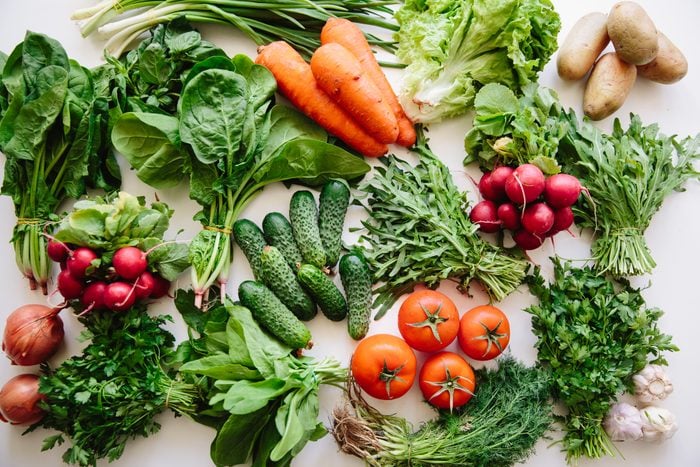
11. Eat what’s in season
This is one simple way to save money on groceries. In-season produce is cheaper because it’s more easily available. It’s also more eco-friendly (and tasty).
12. Avoid delivery when you can
Grocery delivery services often come with additional fees, so from the get-go it’s cheaper to buy groceries in person or order them online for pickup. Here are the cheapest ways to order groceries online.
13. Keep a price list
Keeping track of the prices of your most commonly purchased groceries will allow you to see when you’re getting a good deal and when you’re not. For instance, if you recently paid 99 cents for creamed corn, you’ll know not to buy it when you see it for $1.79.
14. Look at expiration dates on sale items carefully
Foods that are significantly marked down are typically close to their use-by date, so make a plan for using them immediately or else they might go to waste. Those dates are often approximate, so you’ll have some wiggle room, but it’s better not to chance it. Here’s how long milk lasts past its sell-by date.
15. Buy versatile foods
Pantry staples like pasta, rice and potatoes can be used a million different ways, so you won’t get sick of them and toss the leftovers. Starchy basics are also a great way to feel full without breaking the bank.
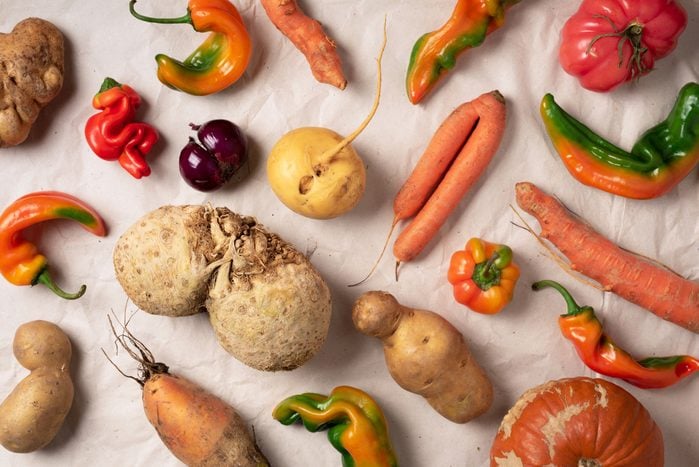
16. Buy ugly produce
Did you know that nearly a third of what’s grown in the U.S. isn’t sold because it’s not quite good-looking enough? Misfits Market rescues that less-than-cute (but still perfectly tasty) tomato from the dumpster and sells it for up to 40% off. It’s organic, sustainable and cost effective.
17. Grate your own cheese
Just as you save money when you don’t buy pre-chopped fruits and veggies, you save money when you buy whole cheese instead of the grated or shredded versions stores sell. Get that grater out at home and voilà!
18. Stop shopping at eye level
We tend to look at items placed at eye level because they’re convenient, and marketers know that, so that’s where the pricier items often end up. Zakaria tells us that more often than not, the better-priced items are placed on the lower shelves. Who knew “look down” could be the answer to how to save money on groceries?
19. Change stores
The store closest to your home might not be the cheapest. Check online or in-store to do some price comparison research and find out what makes sense for your needs. Stores like Walmart, Lidl, Aldi or Costco are typically good bets. Looking for other ways to save? Here’s the cheapest day of the week to do anything.
20. Shop less often
Even at the cheapest grocery stores, more visits means more grocery store spending. Keep your trips down to once a week, if possible. This will also force you to use up ingredients you already have at home. Don’t forget to check out the grocery store with the best reputation.
Credit: Source link